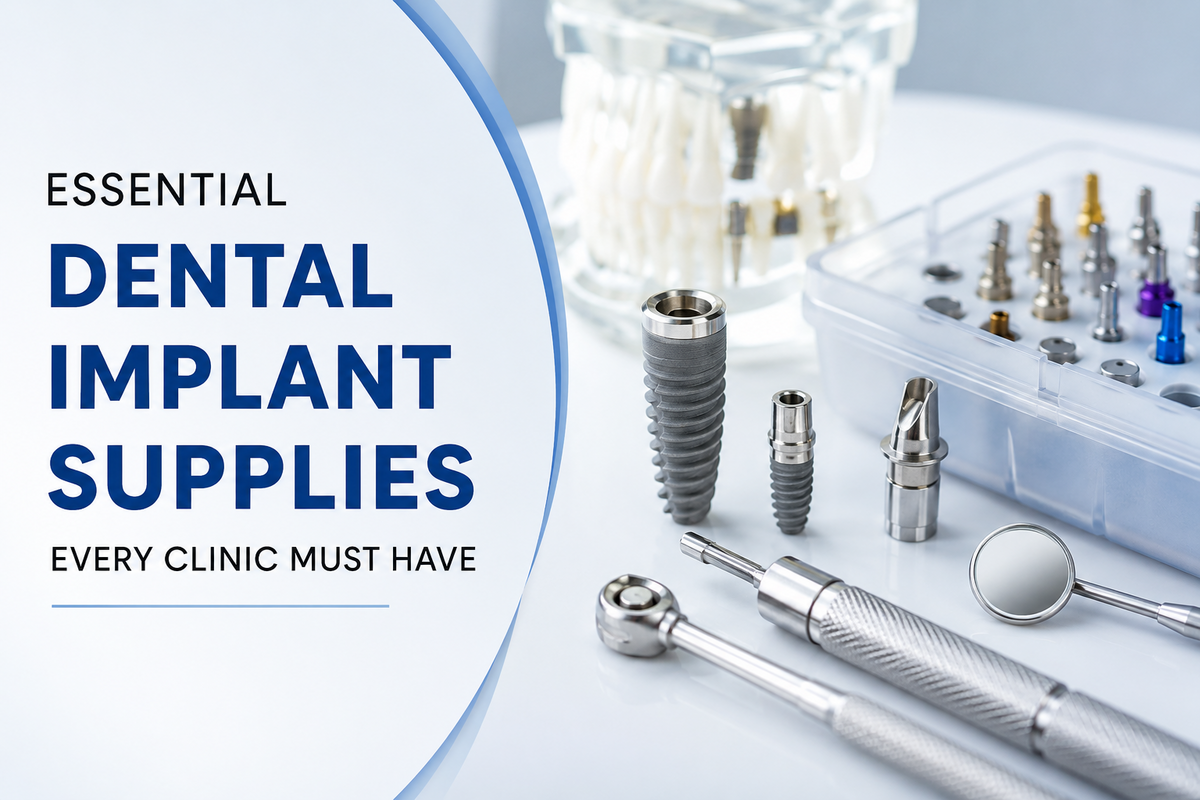
An implant case succeeds or struggles long before the drill ever touches bone. A lot of it comes down to what's actually sitting on the tray, the dental implant supplies a clinic's stocked ahead of time. Drills, fixtures, healing components, all the small stuff that lets a clinician move through a procedure smoothly instead of scrambling for something that should've already been there.
Doesn't matter if it's a small practice doing implants occasionally or a dedicated multi-chair implant center, the right supplies matter just as much as the hands doing the work. Good equipment cuts delays, keeps things moving, and genuinely leads to better outcomes for whoever's in the chair that day.
Why Do Quality Dental Implant Supplies Actually Matter So Much?
Implant treatment runs through a lot of precise stages, diagnosis, planning, placement, healing, final restoration, and each one depends on tools that actually hold up. Solid dental implant supplies mean better accuracy during the procedure itself, safer outcomes, less time spent in the chair, a workflow that doesn't keep stalling, instruments that last, and a clinician who's actually confident in what's in front of them. It also cuts down replacement costs over time and avoids the kind of mid-procedure scramble nobody wants.
What Does the Implant Workflow Actually Involve?
A case that goes well moves through evaluating the patient, planning the surgery, prepping the site, placing the implant, letting it heal, taking impressions, doing the final restoration, and following up after. Every one of those steps needs the right products already on hand, not pieced together last minute.
What Are the Essential Dental Implant Supplies Every Clinic Should Stock?
Implant surgical kits are really the foundation. A complete kit usually covers pilot drills, twist drills, depth gauges, torque drivers, hand drivers, ratchets, parallel pins, and implant carriers. Having it all together means nobody's hunting for a missing tool mid-surgery.
Implant motors and handpieces handle the precision drilling, and they need real torque and speed control to do that job well. Worth looking for accurate torque settings, a digital readout, programmable options, smooth operation, and built-in irrigation. Good handpieces improve drilling accuracy while keeping heat down, which protects the bone nearby.
Surgical drills prep the osteotomy with real precision, and clinics should keep several sizes on hand for different implant systems, initial drills, pilot drills, intermediate drills, final drills, countersink drills, bone profile drills. Sharp, well-kept drills reduce trauma and lead to better surgical results.
Implant fixtures are really the centerpiece of the whole treatment, arguably the most important item among the dental implant supplies a clinic actually uses. They come in different diameters, lengths, thread designs, surface treatments, and connection types, and choosing the right one depends on bone density, available space, and the plan built for that specific patient.
Healing components shape the tissue around the implant once it's placed, healing abutments, cover screws, temporary healing caps, all contributing to healthier gum contours and better restorative results later.
Prosthetic components cover the restoration side, impression copings, analog models, scan bodies, temporary and final abutments, titanium bases, prosthetic screws. Keeping enough of these on hand prevents delays once it's time to actually restore.
Bone grafting materials come up often, since a lot of implant cases need augmentation first, bone graft substitutes, xenografts, allografts, synthetic materials, bone plugs, all used to rebuild lost bone and build a stable foundation.
Barrier membranes support guided bone regeneration, protecting graft material while encouraging new bone growth, collagen, resorbable, or non-resorbable depending on the case.
Surgical instruments beyond the implant-specific tools matter too, tissue forceps, surgical scissors, periosteal elevators, needle holders, curettes, bone files, suction tips. Quality stainless steel makes a real difference in how well these hold up.
Sutures matter more than people sometimes credit them for. PTFE, nylon, silk, vicryl, monofilament, each fits a different clinical situation, and the right choice really depends on the case at hand.
What Infection Control Supplies Are Actually Non-Negotiable?
A sterile surgical environment protects everyone in the room. Sterile gloves, surgical masks, protective gowns, sterile drapes, surface disinfectants, sterilization pouches, disposable irrigation tubing, none of it optional, all of it part of keeping a clinic actually compliant.
How Does Digital Technology Fit Into Implant Work Now?
More clinics lean on digital tools for planning these days, intraoral scanners, digital treatment planning software, surgical guides, 3D printed models, CBCT imaging. These sharpen planning accuracy and make it easier to actually walk a patient through what's happening.
What Small Consumables Should Every Implant Practice Keep on Hand?
The small stuff matters more than people expect mid-surgery. Irrigation saline, surgical aspirator tips, cotton rolls, gauze, local anesthetic supplies, mixing pads, disposable syringes, impression materials, all of it needs to stay stocked. Running out of something this basic can throw off even a straightforward implant procedure.
How Do You Actually Choose Reliable Dental Implant Supplies?
Price alone shouldn't drive this. Product quality matters most, clinically tested items made under recognized standards. Compatibility matters too, components genuinely need to work with your specific implant system. Availability's worth checking, a supplier with consistent stock saves real headaches later. Technical support counts, an experienced supplier can walk you through questions and stand behind what they sell. Overall value matters more than the lowest price tag, since reliable products cut maintenance costs and keep treatment moving efficiently.
How Should a Clinic Actually Organize Implant Inventory?
A few simple habits go a long way. Check stock regularly instead of waiting until something's gone. Keep surgical and restorative supplies clearly separated. Label storage drawers so nobody's guessing mid-procedure. Rotate stock by expiration date. Keep emergency backup on hand. Schedule a monthly review so nothing sneaks up on the schedule.
Why Do Dental Professionals Actually Choose Sky Dental Supply?
Trust here comes from dependable products backed by real support, not just a catalog. A wide selection of implant products, trusted international brands, fair pricing, stock you can count on, fast processing, and support that actually knows what it's talking about. Whether a clinic's doing a handful of implants a month or full-mouth restorations regularly, the goal's matching the right dental implant supplies to what a practice actually needs.
Final Thoughts
Successful implant treatment comes down to more than clinical skill alone. Every step needs dependable instruments, restorative components, surgical consumables, and inventory that's actually organized. Investing in premium dental implant supplies lets clinicians work with real confidence while delivering safe, predictable results.
At Sky Dental Supply, the goal's helping dental professionals stay prepared for every stage of implant treatment, from the first surgical step through final restoration.
Frequently Asked Questions
What are dental implant supplies?
The instruments, implant fixtures, surgical kits, restorative components, bone graft materials, and consumables needed to complete implant procedures safely and efficiently.
Why does it matter to use high-quality implant supplies?
Better products improve surgical precision, reduce complications, last longer, and genuinely contribute to better patient outcomes.
What should every clinic keep stocked in its implant inventory?
Surgical kits, implant drills, implant fixtures, healing abutments, prosthetic components, sutures, infection control products, and essential consumables.
How often should implant instruments actually be replaced?
Depends on usage, sterilization cycles, and manufacturer guidance. Regular inspection helps maintain accuracy and patient safety.
Does Sky Dental Supply cover both surgical and restorative implant needs?
Yes, the range covers implant surgery, restoration, infection control, and general dental practice needs in one place.
How can a clinic actually improve implant inventory management?
Regular stock checks, organized storage, expiration monitoring, and backup inventory all help avoid delays and keep workflow steady.