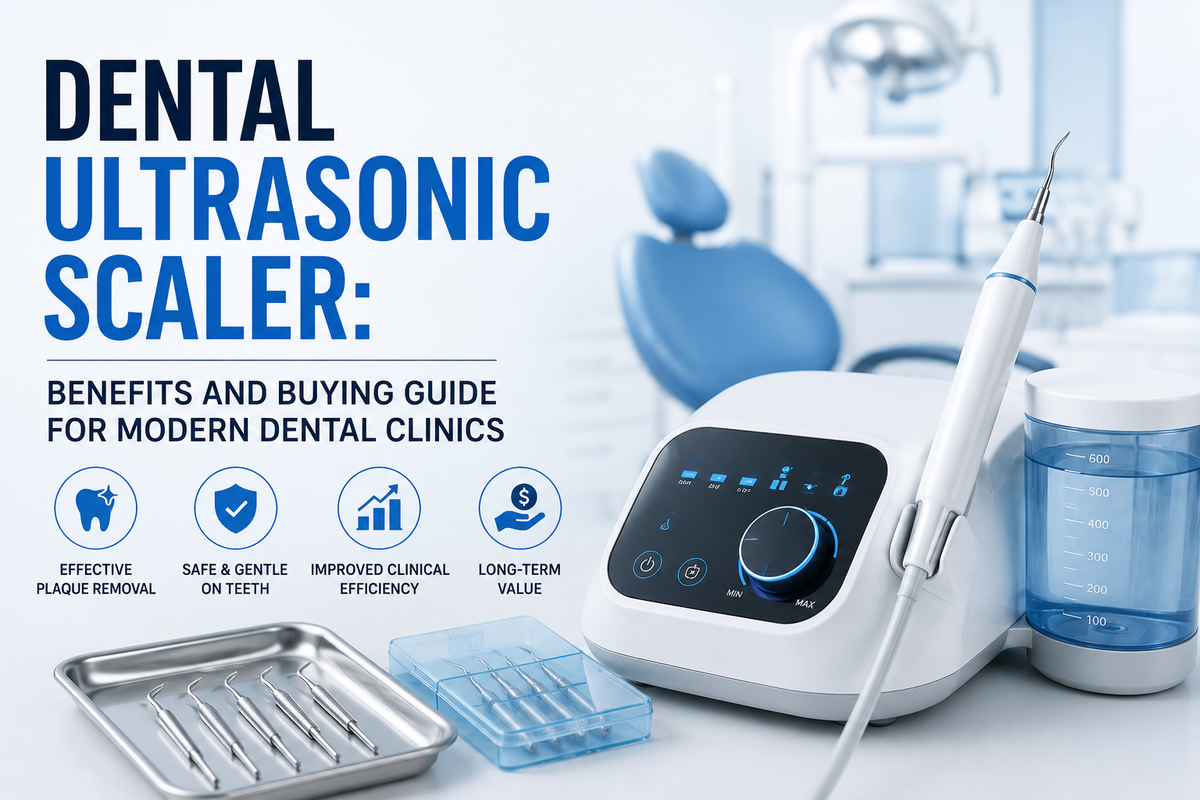
Cleanings are one of those appointments patients don't think twice about, until it drags on too long or feels rougher than it should. That's a big part of why clinics have been moving away from pure hand scaling toward ultrasonic tools instead. Quicker, gentler on the patient, and honestly easier on the hygienist's wrists after a full day of back-to-back cleanings.
At Sky Dental Supply we end up walking clinics through this exact decision fairly often, some setting up shop for the first time, others finally replacing a scaler that's been limping along for years. Here's what actually matters, no filler.
What Is a Dental Ultrasonic Scaler?
It's a tool that clears plaque, tartar, and calculus off teeth using high-frequency vibration, along with a steady spray of water running the whole time. A manual scaler is just scraping by hand. The ultrasonic tip does the breaking-up work on its own while the water keeps things cool and flushes debris out of the way as it goes.
That combo, vibration and water together, is what makes the process faster and generally less rough, especially for anyone dealing with heavier buildup.
Why Are Clinics Moving Toward This Over Hand Scaling?
Mostly because it works better for everyone in the room. Hand tools still have their place and probably always will, but ultrasonic systems cut treatment time and reach spots below the gumline that are genuinely hard to clean well by hand. Clinicians move faster with more consistent results, and patients get shorter, more comfortable appointments, which tends to actually bring people back for their next cleaning instead of pushing it off another year.
What Do You Actually Get Out of Using One?
Cleanings take less time, which matters a lot on a packed schedule. Patients tend to feel more comfortable too, gentle vibration just reads differently than constant scraping, and the water keeps things cool the whole way through.
Plaque and calculus come off more thoroughly, including around bridges, crowns, implants, and orthodontic hardware, spots that are a real pain to reach by hand. For patients with gum disease, ultrasonic tools clear bacterial deposits below the gumline better than manual scaling on its own, which helps long term when it's paired with the right treatment plan.
There's also less physical strain on whoever's doing the cleaning. Repetitive hand pressure all day adds up on the wrists and shoulders over time, and ultrasonic tools take a good chunk of that pressure off. And visibility stays better throughout, since the water's constantly washing away debris and blood while cooling the tip.
What Should You Actually Check Before Buying One?
Power adjustment matters, since not every patient or procedure needs the same intensity. Being able to dial that up or down gives real control instead of one setting fits all.
The handpiece needs to feel decent in hand over a long appointment. Lightweight and ergonomic beats heavy and stiff, especially by the fifth cleaning of the day.
Tip compatibility's worth checking too, since most clinics run a range of procedures and a scaler locked to one tip type gets limiting fast.
Water flow needs to actually be reliable, both for cooling and keeping the area visible. And durability's not something to skip past, this thing runs daily, and cheap internal parts tend to show themselves within a year, usually at the worst time.
How Do You Actually Pick the Right One for Your Clinic?
Depends on what your practice actually does. A general dentistry setup mostly running routine hygiene visits needs something versatile and dependable. A periodontal specialist probably wants something with specialized tips for deeper pocket work. Teaching clinics or multi-chair practices tend to care more about consistency and easy upkeep across several rooms than any single flashy feature.
Knowing your real patient volume and the kind of work your team handles day to day makes this whole decision a lot less guesswork.
Does Quality Actually Matter That Much Long Term?
Yes, more than the price tag suggests at first glance. Reliable equipment means fewer surprise breakdowns, lower repair costs, and a schedule that doesn't get thrown off mid-week by a machine acting up. Patients notice this too, even without saying so outright, well-maintained equipment quietly builds trust. Something that holds steady vibration and water flow for years tends to be the smarter buy, even if it wasn't the cheapest option in the store.
How Do You Keep One Running Well?
Clean and sterilize the compatible parts after every patient, following whatever the manufacturer actually recommends. Swap tips out once they're worn, a tired tip loses effectiveness fast and it's easy not to notice until cleanings start taking twice as long. Check water lines now and then for mineral buildup, and glance over cables and connectors periodically, catching a small issue early beats fixing it after it's already failed mid-appointment.
Why Buy One From Sky Dental Supply?
The supplier matters as much as the equipment itself. Sky Dental Supply carries products clinics can actually depend on rather than whatever's cheapest to stock. Fair pricing, a support team that actually helps figure out the right fit instead of pushing whatever's sitting in inventory, and quick order processing, that's really the whole approach, whether it's one operatory or a full multi-chair setup.
Does This Actually Improve the Patient's Experience?
More than people expect going in. Shorter, more comfortable cleanings keep patients actually coming back for preventive care instead of dodging it. For the clinical team, better efficiency means more scheduling room and steadier care across a full day.
Is This Worth the Investment for a Growing Practice?
At this point, mostly yes. A dental ultrasonic scaler's turned into something close to standard for preventive care and periodontal work, not a luxury item anymore. Worth looking past the invoice total and thinking about how it performs three or five years down the road, since the durable option usually pays for itself well before then.
Final Thoughts
Picking the right scaler is really an investment in the practice and the people walking through the door. Faster procedures, better results, less strain on the team, and a smoother experience for patients, all worth getting right the first time.
At Sky Dental Supply, the goal's helping clinics land on equipment they can actually rely on, whether that's setting up something new, replacing what's finally worn out, or expanding what a clinic can offer.
Frequently Asked Questions
What is a dental ultrasonic scaler used for?
Clearing plaque, tartar, calculus, and stains using vibration and water flow, making cleanings quicker and easier on the patient.
Is ultrasonic scaling safe?
Yes, in trained hands. It cleans well while leaving healthy tooth surfaces alone.
How's it different from manual scaling?
Manual scaling scrapes by hand, ultrasonic tools vibrate and flush deposits away faster. Plenty of dentists use both depending on the case.
What features matter most when buying one?
Adjustable power, a comfortable handpiece, tip compatibility, reliable water flow, and solid durability.
How often should tips be replaced?
Whenever wear shows or per the manufacturer's guidance, usually noticeable through reduced cleaning efficiency.
Do these help with periodontal treatment?
Yes, they clear deposits below the gumline more effectively than manual tools alone.
Why buy from Sky Dental Supply?
Quality equipment, fair pricing, real support, and a range built for clinics that want tools they can count on.