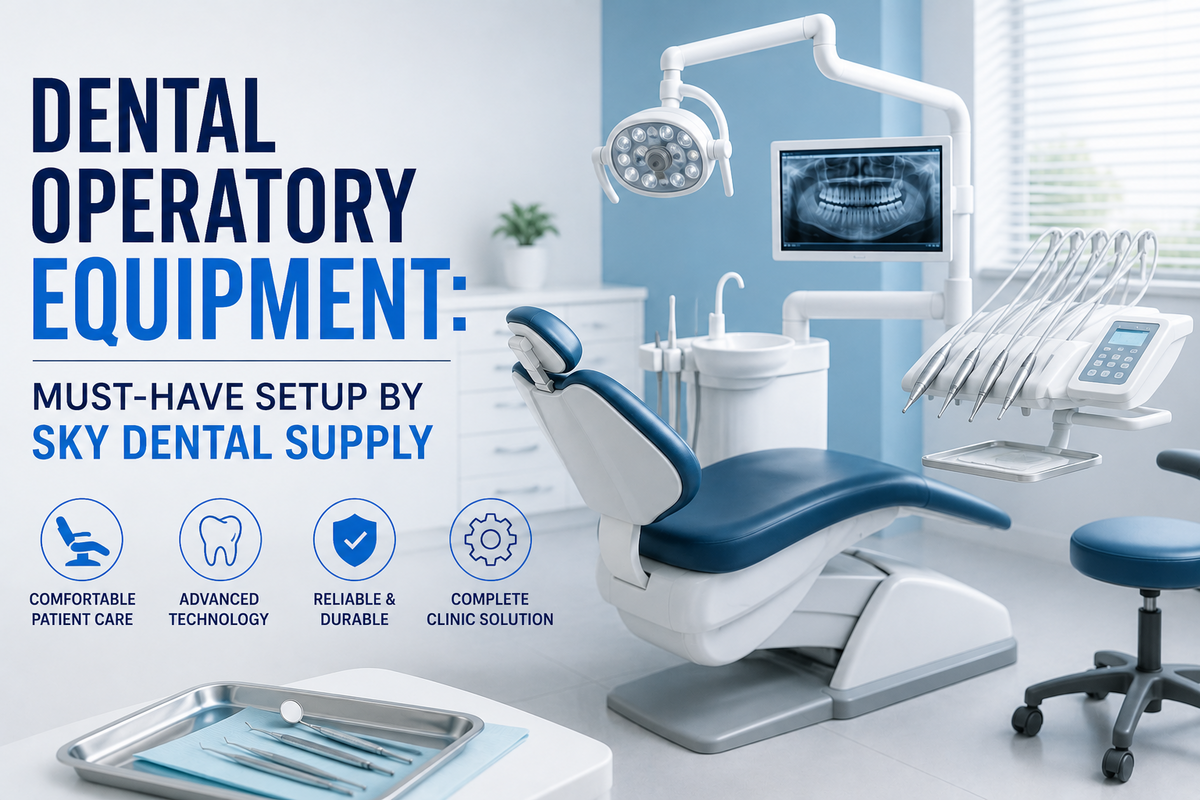
Nobody sets up a clinic thinking hard about cabinet hinges or how quiet a compressor runs. But those small details, stacked together, end up deciding whether a day flows well or feels like a grind. Whether you're building a practice from scratch or finally swapping out a setup that's fifteen years old, the Dental Operatory Equipment sitting in that room matters way more than it gets credit for going in.
We've worked with enough clinics at Sky Dental Supply to know there's no single "right" setup. What actually matters is choosing Dental Operatory Equipment that holds up through years of daily use, not stuff that just looks decent in a showroom.
Why the Setup of the Room Actually Matters
The operatory's where everything happens, exams, cleanings, restorative work, all of it, day in and day out. A room that's laid out sensibly lets a dentist move efficiently while the patient in the chair stays reasonably comfortable through whatever's going on.
Durability, actual function, and ergonomics all have to work together here, not fight each other. Getting the Dental Operatory Equipment right early on saves a lot of maintenance headaches and downtime once the schedule's actually full.
The Chair Is Still Basically the Whole Room
Everything revolves around the chair, no way around it. Comfortable enough that people relax, flexible enough that a dentist can actually work from different angles without wrestling the thing.
Worth checking for smooth electric movement, headrests that adjust properly, memory settings so you're not resetting it between every patient, cushioning that lasts, upholstery that wipes down easily, and a motor quiet enough that people aren't bracing every time it shifts. A patient's first impression of a clinic often comes down to how that chair feels the second they sit in it, more than you'd think.
A Delivery System That Actually Keeps Things Moving
Really this is about keeping instruments within reach so a dentist isn't twisting awkwardly mid-procedure. A decent one includes an air and water syringe, handpiece connections, a control panel that's actually intuitive instead of confusing, integrated suction, and trays arranged in a way that makes sense.
Nail this and posture improves, procedures move faster, and there's just less friction across a whole day of patients.
Lighting Isn't Somewhere to Cut Corners
Good diagnosis depends on actually seeing clearly, more than most people account for when budgeting. Modern LED setups should give shadow-free light, adjustable brightness, color that renders naturally instead of washing things out, low heat output, and a long lifespan that doesn't chew through power.
Consistent bright lighting means less eye strain across a long day, and honestly, better accuracy on anything that needs close attention.
Seating for the Team Matters Just as Much
Dentists and assistants sit for hours most days, and cheap seating catches up fast in the form of back and shoulder pain. Adjustable height, real lumbar support, smooth mobility, decent cushioning, a stable base, worth prioritizing all of it. It's easy to overlook when planning Dental Operatory Equipment, but it quietly shapes comfort and focus over years, not just one shift.
Suction Systems Keep the Room Clean and Actually Visible
A dependable suction unit keeps things dry and clear, which matters both for visibility mid-procedure and comfort for whoever's in the chair. Strong vacuum power, quiet operation, easy upkeep, hygienic design, that's really the baseline. Restorative and surgical work leans on this working properly every single time, no exceptions.
Air Compressors Run Quietly, Until They Don't
Dental equipment runs on a steady compressed air supply, and oil-free compressors have become the default for clean air without a ton of maintenance. Consistent pressure, low noise, decent efficiency, a long service life, all of it matters, since a compressor giving out mid-week can bring a whole clinic to a standstill fast.
Storage and Cabinets Aren't Just About Looking Tidy
Well-designed cabinets do more than keep a room looking organized, they actually support infection control by keeping instruments accessible and properly stored. Soft-close drawers, surfaces that hold up to daily cleaning, layouts that make sense for how the team actually moves, all of it cuts down clutter and saves real time on busy days. This part of Dental Operatory Equipment planning gets skipped over a lot, but it shows up in every single appointment whether anyone notices it or not.
Digital Imaging Isn't Optional Anymore, Really
A lot of modern operatories build imaging right into the setup at this point. Faster diagnosis, images you can see immediately, easier conversations with patients about what's actually going on, and records that don't live in a filing cabinet somewhere gathering dust. It's one of those upgrades that pays for itself fairly quickly in time saved alone.
Infection Control Needs to Be Built In, Not Added Later
Patient safety has to stay front and center, full stop. Seamless surfaces that wipe down easily, touch-free controls where it makes sense, autoclavable components, materials that actually clean well, disposable barriers, proper waterline maintenance. Standards like these build patient trust and keep a clinic compliant without a lot of extra thought once it's set up right the first time.
Ergonomics Aren't a Luxury, They're Prevention
A lot of dental professionals deal with neck, shoulder, and back pain after years in the field, and honestly, a good chunk of that traces back to poor equipment positioning rather than the actual work. Getting instruments, lighting, chairs, and stools set up properly cuts down physical strain across the whole team, not just the dentist. Picking the right Dental Operatory Equipment here is really an investment in the people working there, not just the patients coming through the door.
Why Spending More Upfront Often Saves Money Down the Road
Premium equipment costs more going in, no way around that fact. But the payoff shows up in fewer repairs, lower maintenance bills, better patient comfort, faster procedures, and equipment that just lasts longer without replacement every few years. Unexpected breakdowns end up costing more than the sticker price ever suggested, both in repair bills and in appointments that have to get rescheduled last minute.
Planning Before Buying Anything
Every clinic's different depending on specialty and patient load, so it's worth actually thinking through space first, enough room for patients to move, staff to work, and whatever expansion might come down the line. Think about what procedures actually happen most, general dentistry, orthodontics, oral surgery, pediatric work, and cosmetic dentistry all need slightly different Dental Operatory Equipment. And don't skip the unglamorous stuff either, electrical, plumbing, ventilation, whether the room can even handle future tech upgrades.
Why Clinics Keep Coming Back to Sky Dental Supply
Trust here comes from equipment that actually holds up, backed by support that knows what it's talking about rather than reading off a script. It's not just about selling a chair or a light, it's helping a clinic figure out what actually fits their space, specialty, and budget.
That's shown up in a wide range of products, fair pricing, quality that doesn't cut corners, real guidance from people who understand the gear, and order processing that doesn't drag on forever. Whether it's one room or a full multi-chair buildout, the team's there to help land on the right Dental Operatory Equipment for the job.
Upgrading an Existing Clinic Doesn't Have to Be Chaos
A lot of established clinics put off replacing aging equipment because they're worried about the disruption. But upgrading gradually, one piece at a time, usually works better than people expect. Swapping an old chair, tired lighting, a delivery system that's seen better days, or a compressor on its last legs tends to bring faster appointments, better patient experiences, lower maintenance costs, and a clinic that just looks more current, which quietly helps bring new patients in too.
Choosing Equipment That Actually Lasts
Not every piece is built the same, even when the price tags look similar side by side. Worth looking past the number alone and checking for solid construction, manufacturers with an actual track record, spare parts that are easy to source later, real warranty coverage, service support you can actually reach when needed, and controls that aren't a headache to use every single day.
Building for What's Coming, Not Just What's Here Now
Dental technology keeps moving, and equipment that can adapt to digital scanners, intraoral cameras, imaging software, and whatever comes next protects the investment instead of forcing a full replacement in a few years. Flexibility now tends to save real money later.
Patients Notice More Than the Clinical Work
They remember the chair, the lighting, how organized the room felt, how smoothly the whole visit went start to finish. Comfortable seating, quiet equipment, decent lighting, and an organized space all add up to patients coming back and actually mentioning the clinic to people they know.
Final Thoughts
Building a room that actually works takes real planning, not just grabbing whatever's on sale that month. Every piece, the chair, the lighting, the delivery system, the storage, feeds into a smoother day and better care overall. Getting it right early saves a lot of headaches later on.
At Sky Dental Supply, the goal's helping practices build rooms that hold up over time, whether that's a brand-new clinic or one finally getting the upgrade it's needed for a while now.
Frequently Asked Questions
What counts as Dental Operatory Equipment?
The core tools and systems in a treatment room, chairs, operating lights, delivery systems, suction units, compressors, stools, and cabinetry.
Why does quality matter here?
Better equipment means smoother workflow, more patient comfort, lower maintenance costs, and generally better clinical outcomes over time.
How often does this equipment need replacing?
Depends on use and upkeep, but a lot of the major components hold up 10 to 15 years or longer with proper maintenance.
What should I think about before buying?
Clinic size, specialty, patient volume, available space, budget, warranty terms, service support, and whether it'll work with future tech.
Does Sky Dental Supply handle full operatory setups?
Yes, from single rooms to full multi-chair buildouts, with equipment chosen to actually fit what a clinic needs.
Does better equipment actually improve patient satisfaction?
It does. Comfortable chairs, smart layouts, quiet operation, and modern tech all add up to patients feeling more at ease during their visit.