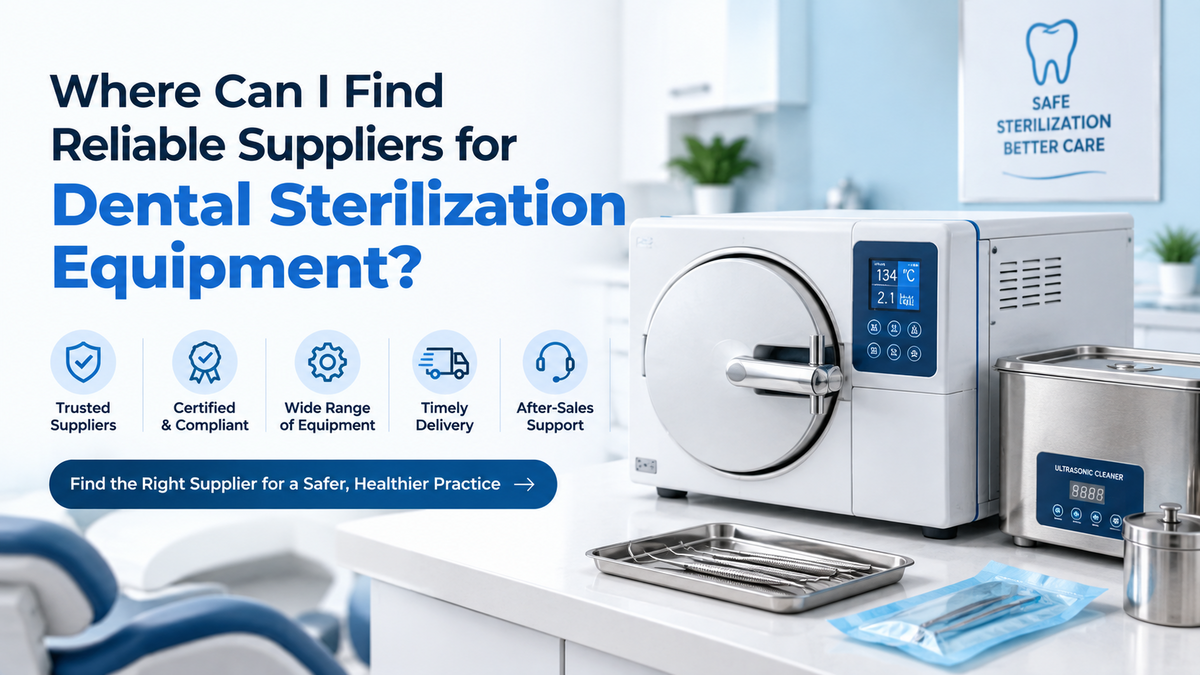
Dental sterilization equipment is one of the most important investments a dental practice can make. From routine examinations to surgical procedures, dental instruments come into contact with patients and must be properly cleaned, processed, and sterilized before they are reused. Choosing the right sterilizer is therefore about more than finding a machine at a good price. Dental practices need dependable equipment, suitable capacity, replacement parts, monitoring supplies, and a supplier they can rely on for ongoing support.
For dentists, orthodontists, oral surgeons, dental laboratories, and other healthcare professionals, finding reliable suppliers for dental sterilization equipment can make instrument processing more organized and consistent. A good supplier should offer reputable equipment, useful product information, replacement components, and access to different sterilization solutions for different practice requirements.
One supplier worth considering is Sky Dental Supply, which offers a dedicated selection of sterilizers and related equipment for dental and laboratory applications.
Why Is Reliable Dental Sterilization Equipment Important?
Sterilization is a critical part of infection prevention in dental settings. Instruments that penetrate soft tissue or bone are considered critical devices and should be sterilized after every use. Heat-tolerant semicritical instruments should also be heat sterilized when appropriate. The CDC notes that steam sterilization is commonly used for heat-stable dental instruments.
A dependable sterilizer helps dental teams process reusable instruments according to the equipment manufacturer's instructions and established infection-control procedures. However, purchasing the machine is only one part of the process. Proper cleaning, packaging, loading, cycle selection, monitoring, maintenance, and documentation are also essential.
This is why choosing a supplier that carries appropriate sterilization equipment and replacement parts can be valuable for a busy dental practice.
What Should You Look for in a Dental Sterilization Equipment Supplier?
There are several factors to consider before purchasing a sterilizer.
1. A Wide Selection of Equipment
Every dental office has different sterilization needs. A small practice may require a compact benchtop autoclave, while a larger clinic with several treatment rooms may need greater chamber capacity and faster processing.
A supplier with a broad selection allows practices to compare different models instead of purchasing the first machine they find.
For example, Sky Dental Supply's sterilizer collection includes dental sterilizers, laboratory sterilizers, replacement parts, Tuttnauer printers, and water distillers. Its current selection includes products from manufacturers and vendors such as Tuttnauer, Midmark, SciCan, CPAC, DCI, and RPI Replacement Parts.
2. Reputable Sterilizer Brands
A sterilizer is a long-term equipment investment, so the manufacturer matters. Established brands can provide access to model-specific documentation, replacement parts, service information, and maintenance resources.
Rather than focusing exclusively on the lowest purchase price, dental practices should consider the machine's expected workload, compatibility with their instruments, maintenance requirements, and total ownership cost.
3. Different Chamber Capacities
Capacity is another important consideration. The right size depends on the number of instruments processed, the number of patients treated, and the practice's daily workflow.
Sky Dental Supply's current selection includes benchtop autoclaves in several capacities. Examples listed on its sterilizer page include the LABSCI 9 at 19L, LABSCI 10 at 23L, LABSCI 12 at 34.4L, LABSCI 15 at 65L, and LABSCI 15L+ at 85L.
Having multiple sizes available makes it easier for practices to evaluate equipment based on their actual workload.
Types of Dental Sterilization Equipment to Consider
Not every dental practice needs exactly the same sterilization technology. Understanding the major categories can make the purchasing process easier.
Steam Autoclaves
Steam autoclaves use pressurized steam to sterilize heat-tolerant instruments. They are widely used in dental practices and are suitable for many reusable instruments.
When choosing an autoclave, consider chamber capacity, cycle options, loading requirements, controls, documentation features, and maintenance needs.
Sky Dental Supply currently lists products such as the EZ11 Plus Fully Automatic Autoclave by Tuttnauer, as well as multiple LABSCI benchtop autoclaves.
Dry Heat Sterilizers
Dry heat sterilizers use heated air rather than pressurized steam. They can be appropriate for certain heat-stable instruments and materials when used according to the manufacturer's instructions.
For practices considering dry heat equipment, it is important to understand which instruments are compatible with the selected sterilization method.
Sky Dental Supply lists a Cox Dry Heat Sterilizer 110-120V within its sterilizer selection.
Rapid Heat Sterilizers
Rapid heat systems are designed around faster sterilization cycles for appropriate applications. They may be useful in practices where instrument turnover and workflow efficiency are important.
Sky Dental Supply's selection includes CPAC RH-Pro9 RapidHeat HVHA Sterilizer and CPAC RH-Pro11 RapidHeat HVHA Sterilizer models.
Before purchasing any rapid sterilization system, practices should confirm that its capabilities match the instruments being processed and follow the manufacturer's instructions.
Why Replacement Parts Matter
A common mistake is to think about sterilization equipment only as a one-time purchase. Sterilizers contain components that may eventually require inspection, replacement, or maintenance.
Door seals, gaskets, filters, clips, hinges, and other components can play an important role in keeping equipment operating correctly.
For example, Sky Dental Supply lists replacement components including Tuttnauer door components, HEPA filters, door gasket seals, Midmark door seal kits, and other autoclave parts.
Having access to compatible replacement parts through the same supplier can simplify equipment maintenance and reduce the difficulty of locating model-specific components.
Sterilization Monitoring Should Be Part of Your Process
Buying a high-quality sterilizer does not eliminate the need for sterilization monitoring.
The CDC recommends using a combination of biological, mechanical, and chemical indicators to monitor sterilization processes. Biological indicators, or spore tests, are considered the most accepted method for directly assessing the sterilization process, while mechanical and chemical monitoring can help identify cycle problems and procedural errors.
Dental teams should also maintain appropriate sterilization records and follow applicable infection-control procedures.
This means that when selecting a supplier, it is useful to look beyond the sterilizer itself and consider whether the supplier can support the broader equipment and maintenance needs of the practice.
Why Dental Practices Choose Specialized Suppliers
A general medical equipment marketplace may have sterilization products, but a specialized dental supplier can make the purchasing process easier because its product selection is built around dental practice requirements.
A dental-focused supplier can help customers find equipment across categories such as:
Dental sterilizers
Laboratory sterilizers
Autoclaves
Dry heat sterilizers
Rapid heat sterilizers
Sterilizer replacement parts
Water distillers
Printer accessories for compatible sterilizers
This broader selection can be particularly useful when a dental office is upgrading an existing sterilization area or setting up a new practice.
Sky Dental Supply: A Source for Dental Sterilization Equipment
Sky Dental Supply is a dental supply company offering dental equipment, supplies, pharmaceuticals, orthodontic products, surgical products, and infection-control-related categories.
Its dedicated sterilizers section currently features 78 products across different sterilization-related categories, including dental sterilizers, laboratory sterilizers, replacement parts, Tuttnauer printers, and water distillers.
The selection includes equipment from several recognized manufacturers and suppliers, including Tuttnauer, Midmark Corporation, SciCan, CPAC, DCI, and RPI Replacement Parts.
One benefit of having both complete sterilization systems and replacement components available is that dental offices can address equipment purchasing and ongoing maintenance needs from one source.
Sky Dental Supply also provides a price-match guarantee and offers quote-request options for customers looking for specific equipment.
For dental practices comparing suppliers, this combination of product variety, equipment options, replacement parts, and customer support can make Sky Dental Supply a practical option to consider.
How to Choose the Right Sterilizer for Your Dental Office
Before placing an order, make a list of your practice's requirements.
Start by considering how many instruments your team processes during a typical day. Next, determine whether your instruments are compatible with steam, dry heat, or another sterilization method. Then evaluate chamber size and cycle requirements.
You should also consider:
Practice volume: A busy dental office may benefit from greater chamber capacity and efficient cycles.
Instrument types: Verify that the sterilization method is appropriate for the instruments you use.
Available space: Measure the area where the sterilizer will be installed and check electrical and utility requirements.
Maintenance: Find out which components require routine inspection or replacement.
Monitoring: Make sure your practice has a suitable sterilization monitoring process.
Manufacturer instructions: Always use the sterilizer according to its specific instructions and requirements.
The CDC emphasizes that cleaning should occur before sterilization because removing organic and inorganic material improves the effectiveness of the sterilization process. Instruments should then be appropriately inspected, packaged, and processed.
Don't Choose a Supplier Based Only on Price
Price is naturally an important part of purchasing decisions, but it should not be the only consideration when buying dental sterilization equipment.
A low-cost machine may not be the best value if it does not fit the practice's workload, requires difficult-to-find replacement components, or lacks the features needed by the dental team.
Instead, compare the complete value of the purchase. Look at the equipment's capacity, manufacturer, available replacement parts, warranty or service information, operating requirements, and long-term maintenance needs.
A reliable supplier should make it easier to understand what you are purchasing rather than simply listing a product and price.
Final Thoughts
Reliable dental sterilization equipment is an essential part of an effective instrument-processing workflow. Dental practices should look for suppliers that offer reputable equipment, different capacity options, replacement parts, and products suited to their specific requirements.
Sky Dental Supply is one supplier to consider when searching for dental sterilization equipment. Its sterilizer category includes autoclaves, dry heat and rapid heat sterilizers, laboratory equipment, replacement parts, and products from several established brands.
Whether you are opening a new dental office, replacing an older autoclave, expanding your sterilization area, or searching for compatible replacement parts, taking time to compare equipment and supplier support can help you make a more informed purchasing decision.
Frequently Asked Questions
1. Where can I find reliable suppliers for dental sterilization equipment?
You can find dental sterilization equipment through specialized dental supply companies, authorized distributors, and established medical equipment suppliers. Sky Dental Supply offers a dedicated selection of dental and laboratory sterilizers along with replacement parts.
2. What type of sterilizer is commonly used in dental offices?
Steam sterilizers, or autoclaves, are commonly used for heat-tolerant dental instruments. The appropriate equipment depends on the instruments, materials, practice workflow, and manufacturer's instructions.
3. What should I consider before buying a dental autoclave?
Consider chamber capacity, instrument types, expected daily workload, cycle requirements, available installation space, maintenance needs, monitoring procedures, and manufacturer support.
4. Does Sky Dental Supply sell sterilizer replacement parts?
Yes. Sky Dental Supply's sterilizer category includes replacement components such as door seals, gaskets, filters, clips, hinges, and other parts for selected sterilizer models.
5. Why is sterilization monitoring important?
Monitoring helps dental teams verify that sterilization cycles are operating as intended and identify potential procedural or equipment problems. The CDC recommends using biological, mechanical, and chemical monitoring methods as part of a dental sterilization process.
6. Can I buy dental sterilizers online?
Yes. Dental practices can purchase sterilization equipment through specialized online dental suppliers. Before ordering, confirm the product specifications, electrical requirements, capacity, compatibility, shipping information, and manufacturer requirements.
7. Does Sky Dental Supply offer different sterilizer sizes?
Yes. Its current selection includes benchtop autoclaves in several capacities, including models listed at 19L, 23L, 34.4L, 65L, and 85L.
8. Who should purchase dental sterilization equipment?
Dental offices, oral surgery practices, orthodontic clinics, dental laboratories, and other professional healthcare settings that process reusable instruments may require appropriate sterilization equipment. The specific equipment should be selected according to the practice's procedures, instruments, applicable requirements, and manufacturer instructions.