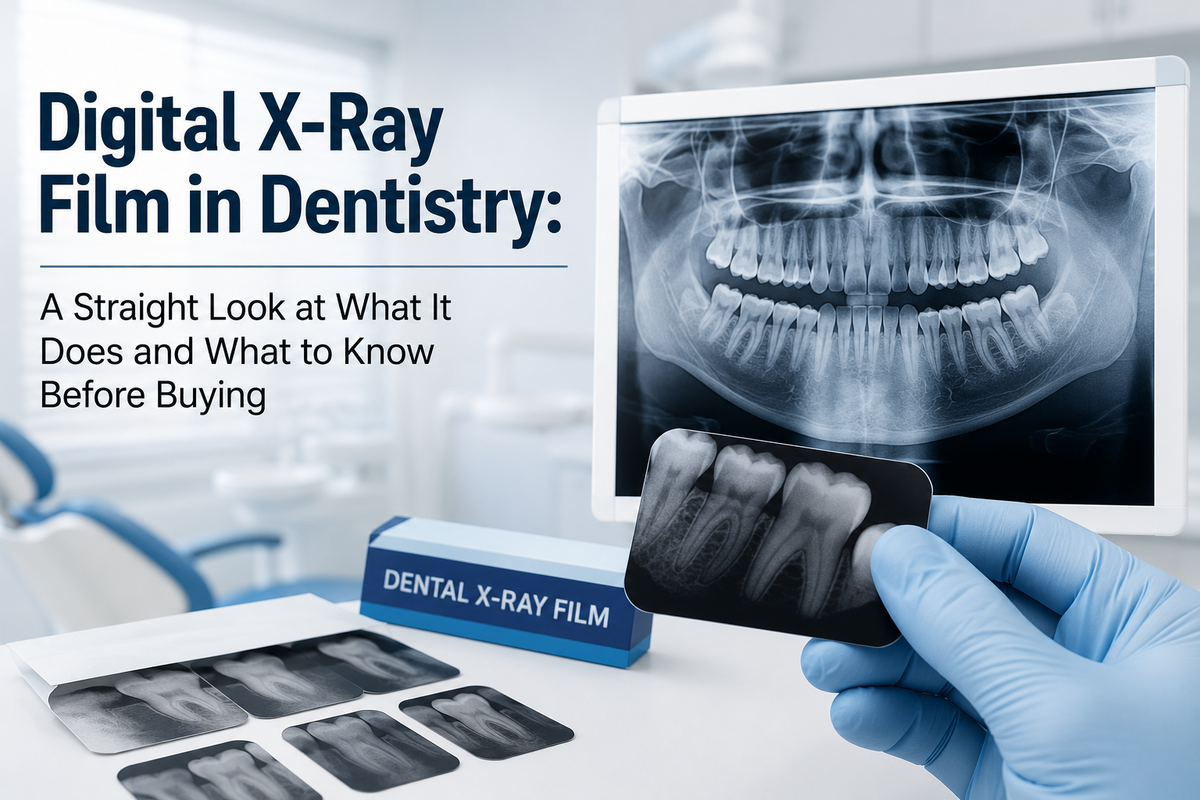
Dentistry's shifted quite a bit over the last decade, and a good part of that comes down to how clinics see what's actually going on inside someone's mouth. Digital X-Ray Film in Dentistry has become the norm in most practices now, replacing the old film and chemical routine with something quicker, sharper, and just easier on everyone in the room.
Film used to mean sitting around for several minutes before there was even an image to look at. Digital gets there in seconds, with less radiation to boot. Whether it's catching a cavity, tracking bone loss over time, planning an implant, or checking how a root canal's healing, this shift has really changed how confidently a dentist can make a call on the spot.
At Sky Dental Supply, we walk clinics through this exact kind of upgrade pretty regularly. Here's an honest rundown of what Digital X-Ray Film in Dentistry actually involves, why practices have moved this direction, and what's worth weighing before buying anything.
What Is Digital X-Ray Film in Dentistry, Actually?
It's the modern stand-in for old photographic film, capturing a dental radiograph electronically instead of on physical film. The image pops up on screen right away, and a dentist can zoom, brighten, sharpen, whatever's needed to actually see the problem clearly, no waiting on development, no darkroom involved at all.
That's really the core reason Digital X-Ray Film in Dentistry has become standard for general dentists, orthodontists, oral surgeons, pediatric specialists, and implant practices across the board.
Why Have So Many Clinics Actually Switched?
Mostly because it fixes several things at once instead of just one. Images show up instantly. Diagnostic precision improves. Radiation drops. Talking through findings with a patient gets easier. Storage stops requiring a filing cabinet. Treatment planning moves faster. Less chemical waste piles up. And running costs go down once the equipment's paid for itself. Instead of waiting on film, a dentist can pull the image up right there and start the conversation in the same visit.
Does Image Quality Actually Improve?
Yes, and it's a real difference, not a marginal one. Modern digital systems produce sharp, detailed images that catch problems a lot earlier than old film ever managed. A dentist can enlarge a section, adjust brightness or contrast, and look closely at a tricky spot without redoing the exposure, which used to happen a lot more with film than people probably remember.
Is Radiation Exposure Actually Lower?
Generally, yes, by a meaningful amount. Digital imaging typically needs a lot less radiation than film systems did, which makes routine visits safer both for patients and for the staff running the equipment day after day. Matters most for kids, older patients, pregnant patients when imaging's actually needed, and anyone getting monitored regularly over time.
Is Diagnosis Genuinely Faster This Way?
Yes, noticeably. Since the image appears almost right away, a dentist can diagnose something in the same appointment instead of stacking in extra waiting time. That means happier patients, tighter scheduling, better treatment acceptance, and appointments that just move along smoother overall.
Does This Actually Help Patients Understand Their Own Situation?
It really does. A lot of people struggle to picture a dental problem when it's only explained out loud. Seeing the actual image on a monitor right there changes that. A dentist can point directly at the decay, the bone loss, the impacted tooth, whatever it is, and patients tend to feel more confident about treatment once they've actually seen the issue for themselves instead of just hearing about it.
Is Storage and Sharing Actually Easier?
Much easier. Physical film takes up real space and gets damaged or lost more often than people think. Digital images stay stored electronically, pull up instantly, share cleanly with specialists, go easily to insurance providers, and slot straight into a patient's record without extra steps. It just smooths the whole process out.
Where Does This Actually Show Up in a Clinic?
Pretty much everywhere in modern dental care.
Cavity detection, small cavities between teeth often stay invisible during a regular visual check, and digital imaging catches early decay before it turns into something bigger and more expensive.
Root canal treatment, dentists rely on digital imaging to measure canal length, catch infections, track healing, and confirm the treatment worked.
Implant planning, accurate imaging helps assess bone density, bone height, proper positioning, and surrounding anatomy before anything's actually placed.
Orthodontic treatment, digital imaging tracks alignment, jaw growth, bite issues, impacted teeth, and how treatment's coming along.
Gum disease assessment, periodontal disease causes gradual bone loss, and digital imaging tracks bone levels accurately over time.
Wisdom tooth evaluation, impacted teeth beneath the gums show up clearly, position, root development, proximity to nerves, all before extraction.
What Are the Different Types of Digital Dental Imaging?
Intraoral imaging captures pictures from inside the mouth, bitewing, periapical, occlusal X-rays, mostly for routine checkups. Extraoral imaging covers a wider view, panoramic, cephalometric, CBCT scans, useful for orthodontics, implant planning, oral surgery, and the more complicated cases needing a fuller picture.
How Do You Actually Choose the Right Setup?
Price alone doesn't tell the whole story. Worth checking image resolution first, since sharper images cut down diagnostic guesswork. Sensor compatibility matters, since the system needs to actually work with your existing software without a fight. Durability matters given how often this gets handled daily. Ease of use cuts training time down. And warranty or technical support matters just as much as the product itself, since reliable backup keeps downtime to a minimum.
Does Quality Actually Matter That Much?
Yes, more than the price tag suggests upfront. Cheaper products might look like a good deal at first, but poor image clarity tends to lead to missed diagnoses, repeat exposures, longer appointments, unhappy patients, and higher maintenance costs down the line. Paying a bit more for something dependable usually pays off over the life of the equipment.
Why Buy From Sky Dental Supply?
The supplier matters just as much as the equipment. Sky Dental Supply focuses on products that hold up under daily use, backed by fair pricing, trusted brands, and support that actually responds when it's needed. Whether opening a new practice or upgrading equipment that's finally showing its age, the team helps match clinics with imaging products that fit their clinical needs and their real budget.
How Do You Keep This Equipment Running Well?
Clean sensors per manufacturer guidelines, use protective barriers for every patient, store sensors safely between uses, check cables for wear regularly, update imaging software when recommended, make sure staff know proper handling, and schedule routine inspections. This kind of upkeep cuts down unexpected downtime and protects the investment over the years.
Where's This Technology Actually Headed?
AI-assisted analysis, cloud-based image management, and smarter imaging software are becoming more common across the industry. Clinics adopting solid digital imaging now are setting themselves up to benefit as these features keep rolling out, and as patient expectations rise, Digital X-Ray Film in Dentistry is shifting from a nice upgrade toward a baseline expectation.
Final Thoughts
Modern dental care runs on accurate diagnosis, efficient workflows, and a decent patient experience, and Digital X-Ray Film in Dentistry plays a real part in all three. Clearer images, faster results, and safer imaging compared to traditional film add up to genuine clinical advantages, whether it's catching cavities early, planning an implant, tracking orthodontic progress, or watching gum health over time.
At Sky Dental Supply, the goal's helping dental professionals get imaging equipment they can actually depend on, built to support long-term clinical success rather than just looking good on day one.
Frequently Asked Questions
What is Digital X-Ray Film in Dentistry?
A digital imaging method that captures dental radiographs electronically, giving instant, high-quality images without traditional film development.
Is digital dental X-ray actually safer than traditional film?
Yes, digital systems generally require noticeably lower radiation exposure while producing clearer diagnostic images.
What are the main benefits of digital dental imaging?
Faster capture, sharper image quality, reduced radiation, easier storage, better patient communication, and quicker diagnosis overall.
Can digital X-rays actually catch cavities early?
Yes, digital imaging picks up small cavities between teeth and beneath existing restorations before they turn into bigger problems.
Are digital dental images easy to store?
Very. Stored electronically, simple to organize, pull up quickly, share with specialists, and include directly in patient records.
How often should this equipment be maintained?
Routine cleaning, regular inspections, software updates, and proper handling should all be part of a clinic's regular maintenance routine.
Why buy Digital X-Ray Film in Dentistry products from Sky Dental Supply?
Quality products, fair pricing, dependable support, trusted brands, and solutions genuinely built for how modern dental practices actually operate.