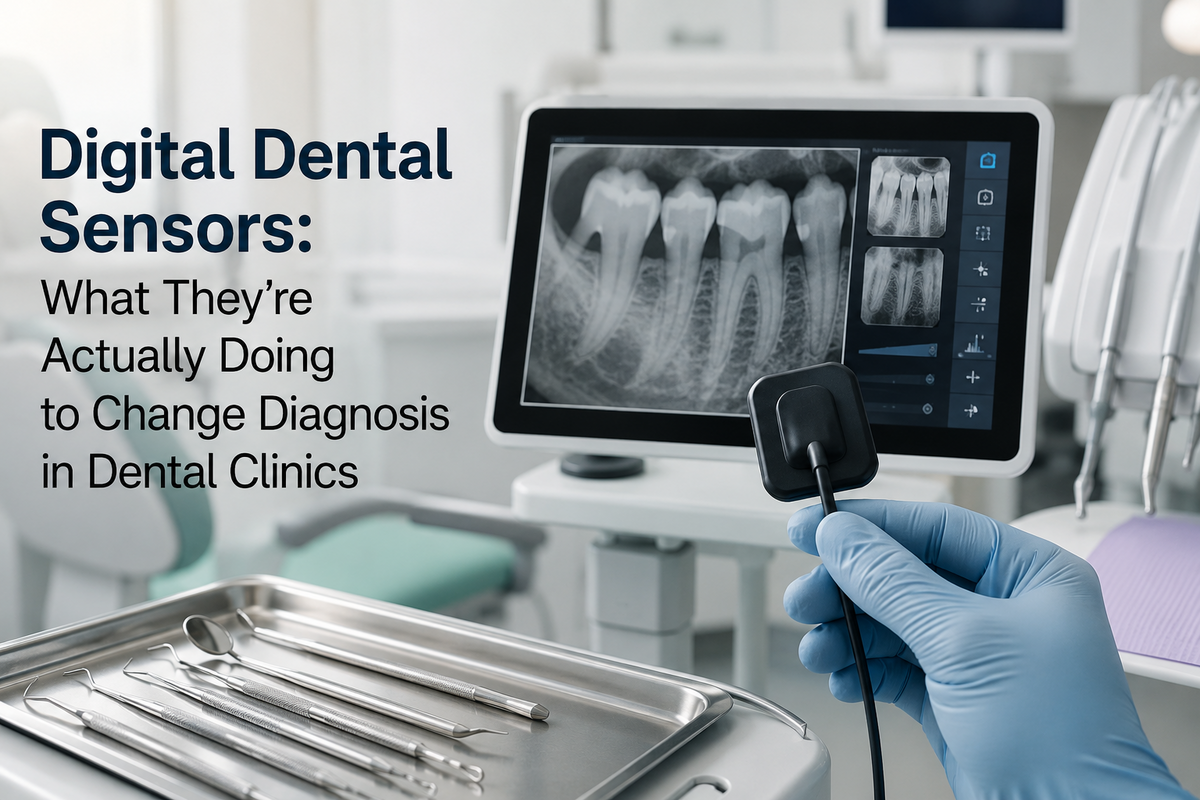
Dentistry's shifted a lot over the past decade, and one change patients barely notice, but probably should, is what's sitting in their mouth during an X-ray these days. Film's been quietly phased out across most clinics, swapped for digital sensors that just work faster and pick up way more detail than the old system ever managed.
At SKY Dental Supply we deal with this kind of equipment all the time, whether it's a small private practice or a growing multi-location group. Here's a straight look at what a digital dental sensor actually does, why clinics have moved toward it, and what's genuinely worth thinking about before buying one.
What Is a Digital Dental Sensor, Really?
It's an electronic device that captures intraoral X-ray images and shows them almost instantly. No film, no chemical processing involved. The sensor turns X-ray energy directly into a digital image that pops up on a screen within a few seconds. Dentists lean on these images to catch cavities, fractures, bone loss, root infections, impacted teeth, gum disease, abscesses, and to plan implants or track how orthodontic treatment's progressing.
Why Have So Many Clinics Moved Away From Film?
Mostly because digital solves speed and accuracy at the same time. Film takes processing time and leaves more room for handling mistakes along the way. Digital skips all of that. Faster diagnosis, sharper images, less waiting around, easier conversations with patients, simpler storage, a workflow that just wastes less time overall. That combination's really why digital's become standard in most clinics now, not just a nice upgrade to have.
Does Image Quality Actually Improve With Digital?
Yes, noticeably. Modern sensors catch detail that film often just misses entirely, tiny cavities between teeth, early decay, hairline fractures, hidden infections, subtle shifts in bone density. Most software also lets a dentist zoom in, sharpen things, and adjust brightness or contrast right there on screen, which makes catching small problems a lot easier before they turn into bigger, costlier ones.
Is Radiation Exposure Actually Lower?
Generally yes, by a real margin compared to film. That matters most for kids, elderly patients, anyone needing frequent imaging through orthodontic treatment, implant cases, or long-term monitoring. It's one of those upgrades patients genuinely notice, even when they can't quite say why the visit felt a bit different.
Is Diagnosis Actually Faster With a Digital Sensor?
Quite a bit, yes. Film X-rays can take several minutes before there's even an image to look at. Digital shows results almost instantly, which means a dentist can go over findings right away, walk through a treatment plan in the same visit, and move faster if it's genuinely an emergency. Patients also tend to like actually seeing their own X-ray on screen instead of just being told what's wrong secondhand.
Does This Actually Help With Patient Communication?
It genuinely does. Instead of trying to describe a cavity or bone loss out loud, a dentist can just pull the image up and point right at what's going on. Patients trust a recommendation a lot more easily when they can see the actual problem themselves, rather than taking someone's word for it.
How Does This Change the Day-to-Day Workflow?
It cuts out a good chunk of the manual work that used to eat up time. Film placement, chemical processing, drying, filing, physical storage, most of that just disappears. Digital systems store images automatically inside a patient's record, meaning less paperwork, faster appointments, and a lot less time spent digging through a filing cabinet for one specific X-ray.
What About Storage and Keeping Records Organized?
It gets a lot simpler. Digital X-rays live electronically, sorted through whatever practice management software a clinic's already running. Quick retrieval, secure backups, easier sharing with specialists, fewer filing mistakes than paper ever allowed. Cloud-based systems push this further still, better access without cutting corners on security.
Which Dental Specialties Actually Benefit From This?
Basically all of them. General dentistry leans on it for routine exams and cavity detection. Endodontics needs it for detailed root canal visualization. Orthodontics uses it to track tooth movement and jaw development over time. Oral surgery relies on it for evaluating impacted teeth and planning procedures. Periodontics tracks bone levels and gum disease progression through it. Implant dentistry depends on it to assess bone quality before placement. That range's really what makes a digital dental sensor worth it for practices offering more than one kind of care.
Does Catching Things Earlier Actually Save Money?
Usually, yes. Small problems left alone tend to become expensive ones fast. Catching decay, infection, or bone changes early generally means less invasive treatment, better outcomes, and lower costs down the line for everyone involved. Early intervention's honestly one of the more underrated benefits of switching to digital.
Are Newer Sensors Actually More Comfortable?
They've come a long way, yes. Rounded edges, slimmer profiles, sturdier build, faster capture times, all of it adds up to a noticeably better experience than older sensors gave patients. No intraoral sensor disappears completely, that's just the nature of the thing, but the newer generation is a real step up from what patients used to sit through.
Do Digital Sensors Actually Save Money Long Term?
They tend to, once the upfront cost works itself out. Clinics stop paying for X-ray film, processing chemicals, film storage, upkeep on processing equipment, and the repeat exposures that used to come from processing mistakes. Those savings add up steadily and eventually offset the initial investment while making the whole clinic run more efficiently.
Is This Actually Better for the Environment?
It is, genuinely. Traditional film processing relies on chemicals that need careful disposal, and digital cuts most of that out entirely. Less paper, less chemical waste, lower water use, barely any physical storage needed. A lot of clinics actually care about this angle too, not just as a talking point, but as part of how they want to run day to day.
What Should You Actually Look For When Buying One?
A few things worth checking closely. Image resolution, since higher resolution genuinely supports more accurate diagnosis. Sensor size, since adult and pediatric patients need different fits. Durability, because this thing gets used daily and needs to hold up under that. Software compatibility, so it actually plugs into your existing imaging and management systems without a fight. Ease of use, since a simpler workflow cuts down staff training time. And warranty or technical support, because reliable backup protects the investment and keeps downtime to a minimum.
Why Choose SKY Dental Supply for This?
We focus on equipment that actually holds up, backed by support that knows what it's talking about. Premium equipment, fair pricing, solutions the industry actually trusts, responsive support, reliable stock, and real guidance for anyone figuring out what fits their practice. Whether you're upgrading something existing or setting up a brand-new clinic from scratch, the goal's helping you land on the right imaging solution the first time around, not the third.
Where's This Technology Actually Headed Next?
AI-assisted analysis, cloud-based imaging, and smarter diagnostic software are all becoming a lot more common now. Modern systems are trending toward faster processing, better image enhancement, smoother integration with patient records, and more workflow automation overall. Clinics investing in solid digital equipment now are setting themselves up to actually benefit as these features keep rolling out.
Final Thoughts
The move from film to digital has genuinely reshaped how diagnosis works in a dental clinic day to day. A digital dental sensor means faster imaging, sharper detail, lower radiation exposure, simpler record management, and better conversations between dentist and patient. For any practice trying to improve efficiency and diagnostic accuracy, this is a practical long-term investment, not just something to chase because it's trendy.
At SKY Dental Supply, the goal's helping clinics get equipment they can actually count on, backed by support that sticks around well after the sale closes.
Frequently Asked Questions
What is a digital dental sensor used for?
Capturing intraoral X-ray images that help dentists diagnose cavities, infections, fractures, gum disease, bone loss, and more.
Are digital sensors actually safer than traditional X-rays?
Yes, they generally require noticeably less radiation while still delivering excellent image quality.
How long does it actually take to capture an image?
Usually just a few seconds, letting a dentist review results right there during the appointment itself.
Can this actually improve treatment planning?
Yes, higher-resolution images give more detail, which supports more accurate diagnosis and better decisions overall.
Are digital sensors suitable for children?
Yes, most come in different sizes built to fit both pediatric and adult patients properly.
Do digital sensors need film or chemicals?
No, images are captured and stored entirely electronically, no film or processing chemicals involved at all.
Can digital X-rays be shared with specialists?
Yes, images can be shared securely with specialists, insurers, or referral clinics without much hassle at all.
Why buy imaging equipment from SKY Dental Supply?
Reliable equipment, fair pricing, dependable support, and solutions genuinely built to help practices improve efficiency and patient care.