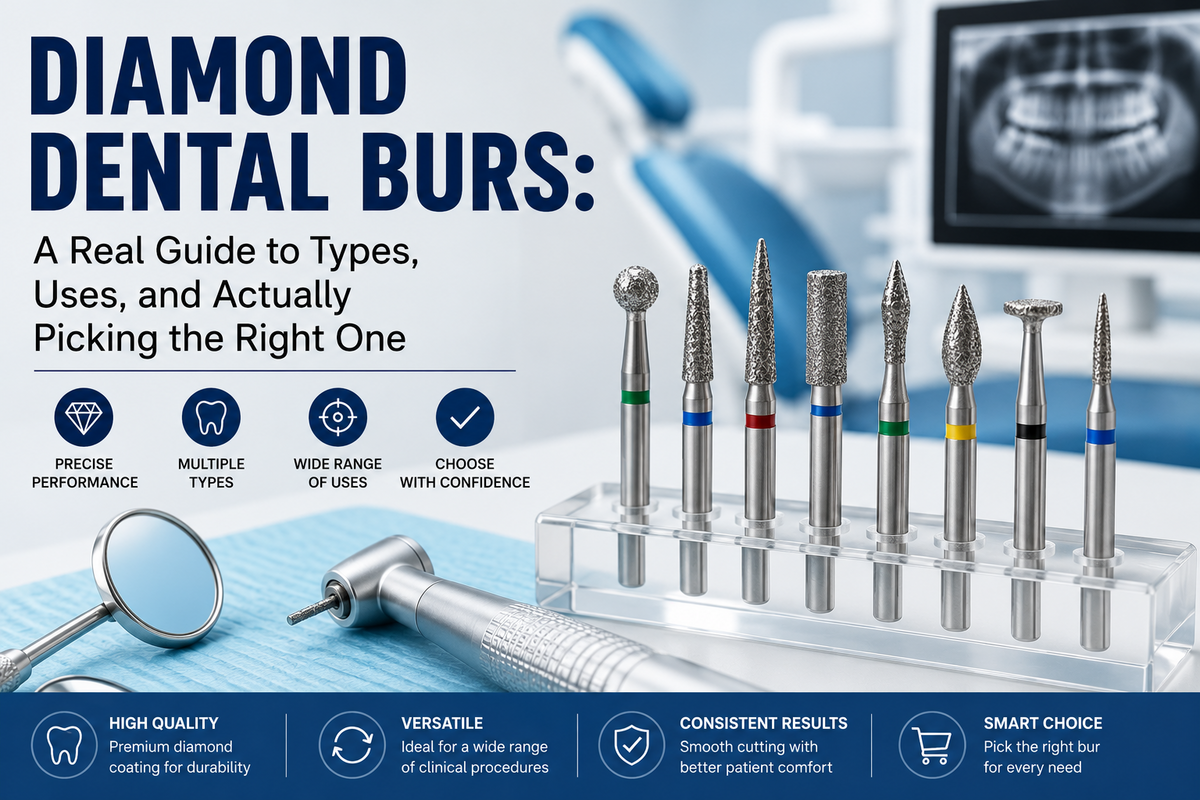
Precision's really what separates a good restoration from a mediocre one, and a lot of that comes down to what's actually in a dentist's hand during the procedure. Whether it's cavity prep, crown adjustments, veneer finishing, or cosmetic contouring, diamond dental burs have earned a real reputation as one of the more dependable rotary tools in modern practice, and once you understand how they actually cut, it's easy to see why.
At Sky Dental Supply, we know the right bur choice affects treatment quality, chairside speed, and how a case actually holds up long term. Here's a straight look at the different types of diamond burs, where each one actually fits, and what's worth thinking through before buying.
What Are Diamond Dental Burs, Really?
They're rotary cutting instruments coated in industrial-grade diamond particles. Unlike carbide burs, which cut with actual blades, diamond dental burs work through an abrasive grinding motion instead, letting a dentist shape and prep hard tooth structure with real control. They're mostly used with high-speed handpieces and come in a wide range of shapes, sizes, and grit levels depending on what a procedure calls for. That range is really why they've become standard for general dentists, prosthodontists, cosmetic specialists, and endodontists alike.
Why Do Dentists Actually Reach for These?
Modern dentistry demands precision while still preserving as much healthy tooth structure as possible, and diamond burs strike that balance reasonably well. High cutting efficiency, real precision for detailed work, less vibration during prep, a smoother finish, a range of grit sizes to pick from, compatibility with most high-speed handpieces, and they hold up well across enamel, ceramics, zirconia, and composite materials when used correctly. That mix is really what's made them a fixture in daily clinical work.
What Are the Main Types Available?
Round diamond burs work well for initial cavity prep, access openings, caries removal, and creating retention points. The rounded shape gives real control in tight spaces where precision matters most.
Flat-end taper diamond burs are probably the most reached-for bur for crown prep. Shoulder margin work, full crown reduction, bridge prep, ceramic restorations, the flat end creates clean finish lines that help a restoration fit properly.
Needle diamond burs handle detailed work well. Fine contouring, interproximal reduction, occlusal anatomy refinement, cosmetic finishing. The slim profile gets into narrow spaces other burs just can't reach.
Flame diamond burs show up a lot in cosmetic dentistry. Veneer prep, composite finishing, gingival contouring, margin refinement. The tapered shape allows smooth transitions and controlled shaping right where it counts.
Football diamond burs are mostly for occlusal anatomy. Occlusal adjustments, cusp shaping, composite restorations, finishing posterior work. The shape mimics natural tooth anatomy pretty efficiently.
Wheel diamond burs are useful for crown separation, slot prep, tooth reduction, and ceramic trimming. Thin profile, accurate cutting even in tight, restricted areas.
How Do Grit Sizes Actually Differ From Each Other?
Super coarse handles rapid tooth reduction, heavy crown prep, and bulk ceramic reduction, removing material fast and saving real chair time. Coarse works well for general tooth prep, crown prep, and initial contouring, a decent balance between speed and precision. Medium's usually considered the most versatile pick, fitting routine restorative work, composite shaping, and general prep. Fine grit produces a smoother surface, useful for finishing restorations, margin refinement, and cosmetic contouring. Extra fine is built for polishing and final touches, veneer finishing and ceramic polishing prep mostly.
Where Do These Actually Get Used Clinically?
Crown preparation needs smooth finish lines and controlled reduction, and diamond burs help produce uniform reduction, proper taper, clean margins, and a better overall fit.
Veneer preparation calls for minimal tooth reduction, and fine diamond burs support conservative prep, smooth enamel surfaces, and accurate depth control throughout.
Composite restorations need precise contouring, and diamond burs assist with margin finishing, surface refinement, occlusal adjustment, and esthetic shaping.
Ceramic restorations need instruments tough enough for hard materials, and diamond-coated burs handle zirconia, porcelain, lithium disilicate, and ceramic crowns without much trouble.
Cosmetic dentistry often involves enamel reshaping and contour refinement, and diamond burs make those procedures a lot more predictable while still preserving natural tooth structure.
Endodontic access benefits from round and tapered burs that create controlled openings while keeping unnecessary tooth removal to a minimum.
How Do You Actually Pick the Right One?
Start with what the procedure actually requires. Crown prep calls for tapered burs, composite finishing usually needs flame or football burs, access openings call for round burs. Matching the bur to the job improves efficiency more than people expect going in. Grit matters too, coarse removes material faster, fine leaves a smoother surface, and using a couple different grits across one procedure often gets the best result overall.
Coating quality's worth checking as well, since better diamond particles stay attached longer and cut more consistently, while cheap coatings wear down fast and slow the whole procedure. Compatibility matters too, always confirm the bur shank actually fits your handpiece, standard friction grip burs work with most modern turbines. And patient comfort factors in here too, sharp, well-made burs generate less vibration and heat, making the whole appointment more comfortable for the person in the chair.
How Do You Make a Diamond Bur Actually Last Longer?
Clean burs right after use, sterilize following manufacturer guidelines, avoid pushing too hard while cutting, swap out worn burs promptly instead of pushing them past their usefulness, store them in organized holders, and check for damage before every single procedure. Routine care like this keeps clinical results consistent and cuts down on replacement costs that add up over time.
What Mistakes Do Dentists Commonly Make Here?
Using one bur for every single procedure regardless of fit. Pushing too hard during cutting. Continuing to use something clearly worn down. Skipping sterilization steps entirely. Picking the wrong grit for the job at hand. Using a bur that's damaged without really noticing. Avoiding these keeps both treatment quality and overall efficiency where they should actually be.
Does Quality Genuinely Matter That Much Here?
Yes, more than the price tag alone suggests upfront. Premium diamond dental burs generally hold their particles better, cut faster, last longer, deliver more consistent prep, cut down chairside time, and improve overall accuracy. Cheaper alternatives might look like a deal at first, but they tend to wear out faster and can quietly compromise precision partway through a procedure.
Why Buy Diamond Dental Burs From Sky Dental Supply?
Sky Dental Supply focuses on instruments that actually hold up under daily clinical use. Premium quality, a wide range of shapes and grit sizes, consistency you can actually count on, fair pricing, fast processing, bulk purchasing options, and support that genuinely knows the products. Whether setting up a new clinic or restocking the basics, the goal's helping practices get instruments that support accurate, efficient, and comfortable procedures.
Final Thoughts
Choosing the right diamond dental burs genuinely improves treatment precision, cuts down chairside time, and leads to better outcomes overall. From routine cavity prep to advanced cosmetic work, these instruments stay essential across nearly every corner of modern dentistry.
Understanding the shapes, grit sizes, and where each one actually fits helps dentists make smarter purchasing decisions and get consistent performance procedure after procedure. Investing in quality burs pays off in smoother workflows, longer instrument life, and results that actually hold up over time.
At Sky Dental Supply, the goal's making sure practices, whether general, specialty, or lab-based, have access to premium instruments backed by fair pricing and support that actually understands the equipment.
Frequently Asked Questions
What are diamond dental burs used for?
Cavity prep, crown prep, veneer procedures, ceramic adjustments, composite finishing, cosmetic contouring, and a wide range of other restorative work.
How are diamond burs different from carbide burs?
Diamond burs remove tooth structure through abrasion, carbide burs cut with actual blades. Diamond burs are generally preferred for smooth shaping and ceramic work specifically.
Which grit size works best for crown preparation?
Coarse and medium grits handle initial crown prep well, while fine grit is better suited for finishing margins.
Can diamond burs actually be sterilized?
Yes, most quality diamond burs are built to handle standard dental sterilization when cared for per manufacturer guidelines.
How often should dental burs be replaced?
Depends on how often they're used, how they're cleaned, and how well they're still cutting. Swap them out once wear or reduced performance shows up.
Are diamond burs suitable for ceramic restorations?
Yes, they're widely used for adjusting porcelain, zirconia, lithium disilicate, and other ceramic materials.
What shape works best for veneer preparation?
Flame-shaped and tapered diamond burs are the most common choice, since they allow precise enamel reduction and clean margin control.
Why choose Sky Dental Supply for diamond dental burs?
Premium instruments, competitive pricing, consistent quality, fast delivery, and support that actually knows the products, built for clinics that need reliability.