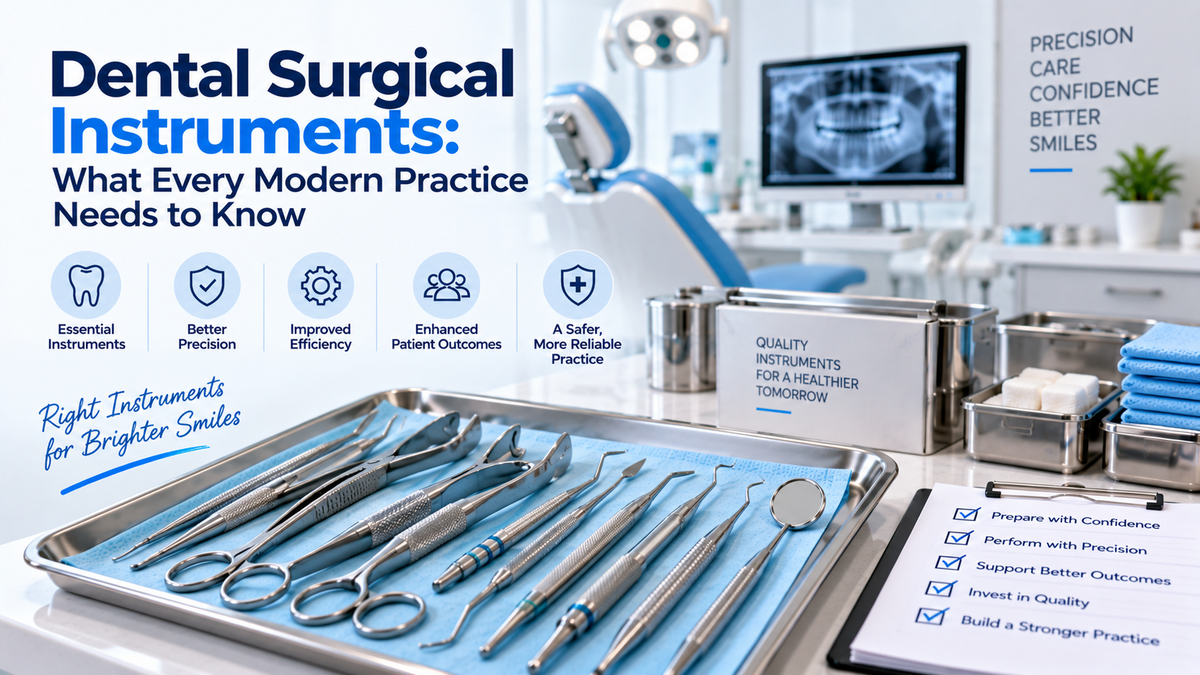
Ask any oral surgeon what separates a smooth procedure from a stressful one, and instrument quality will come up before technique does. You can have years of clinical skill, but if your elevator doesn't seat properly or your needle holder slips mid-suture, the procedure gets harder than it needs to be. Good dental surgical instruments aren't a luxury; they're what let visibility, precision, and tissue handling actually work the way they're supposed to.
Whether you're doing routine extractions, placing implants, running periodontal surgery, or taking a biopsy, the instruments on your tray need to match the job. And keeping a full, organized set on hand means your team isn't scrambling mid-procedure to improvise with the wrong tool.
That said, building out a surgical tray isn't just a shopping exercise. Instrument design, ergonomics, the materials they're made from, how they hold up to sterilization, and how long they'll actually last in daily use all matter. Sky Dental Supply carries a wide surgical lineup elevators, forceps, tissue forceps, hemostats, needle holders, surgical scissors, bone files, bone rongeurs, periosteals, retractors, curettes, chisels, and more for practices building or refreshing their inventory.
What Counts as a Dental Surgical Instrument?
There's a real difference between a surgical instrument and a general dental tool. Exam mirrors, scalers, and restorative hand tools are built for cleaning and everyday treatment. Surgical instruments are built for cutting, extracting, retracting, grasping, separating, or suturing tissue and bone jobs with a higher margin for error.
What ends up on the tray depends entirely on the procedure. An extraction calls for elevators and extraction forceps. Soft-tissue surgery calls for scalpels, tissue forceps, scissors, and needle holders. The clinician's own technique and the patient's anatomy shape the final combination.
The Main Categories of Dental Surgical Instruments
A fully stocked surgical setup can run to dozens of individual tools. Here's what the major categories actually do.
Dental Elevators - Elevators loosen a tooth or root before forceps come into play. The right design depends on the tooth involved, the root shape, and how much access the clinician has. Sky Dental Supply stocks general elevators, luxating elevators, and root-tip elevators pick based on the clinical situation, not whichever one looks the most versatile.
Extraction Forceps - Built to grasp and remove teeth, and shaped differently depending on which tooth and where it sits in the mouth. Most practices end up needing several forcep patterns because no single design handles every extraction well.
Periosteal Elevators - Used to reflect or manipulate soft tissue around bone, particularly when a procedure needs access to structures underneath. Handle shape and working-end design should fit how the clinician actually works.
Surgical Scissors - For controlled cutting or trimming of soft tissue. Blade shape and length change how much access and control you get, which is why it's worth keeping dedicated surgical scissors on hand instead of reaching for general-purpose ones.
Tissue Forceps - Used to grasp and manipulate tissue during surgery. Tip design, grip, and balance all affect how much control the clinician has, so this is worth trying before committing to a set.
Hemostats - Clamping instruments for managing bleeding or getting a secure temporary grip. Check the locking mechanism and jaw alignment regularly; a hemostat that doesn't lock properly is a liability.
Needle Holders - These control the suture needle during closure. A dependable one holds the needle securely while still letting the clinician adjust positioning without a fight.
Bone Rongeurs - Used for removing or trimming small amounts of bone. Jaw configuration and size vary by manufacturer and intended use, so match the tool to the application rather than assuming interchangeability.
Bone Files - Smooth and refine bone surfaces. Sky Dental Supply carries both Miller and Howard pattern files.
Surgical Curettes - Designed for controlled removal of tissue or material in specific applications. Shape changes by area and purpose - not all curettes do the same job.
Retractors - Lip and cheek retractors move soft tissue out of the way to improve visibility and access, without compromising patient comfort.
Scalpels and Surgical Blades - The basic cutting tool for controlled incisions. Available in stainless-steel, carbon-steel, and disposable options, and blade size should follow the procedure, not personal habit alone.
How to Build a Practical Surgical Instrument Set
You don't need every instrument on the market you need the ones that match what you actually do. A useful way to organize a set:
Extraction instruments: elevators, luxating elevators, root-tip tools, extraction forceps
Soft-tissue instruments: scalpels, tissue forceps, surgical scissors, retractors
Hemostasis and suturing: hemostats, needle holders
Bone-management instruments: bone rongeurs, bone files, chisels
Procedure-specific tools: whatever your implant, periodontal, or biopsy work requires
This keeps a practice from either over-buying or getting caught short mid-procedure.
How to Choose the Right Dental Surgical Instruments
Start with what you actually do. An implant-heavy practice needs a different inventory than a general office that mostly handles extractions.
From there, look closely at design handle comfort, working-end shape, balance, and overall build quality. Factor in reprocessing: reusable instruments need a defined cleaning and sterilization routine, and manufacturer instructions should always be the final word. The CDC specifically recommends cleaning instruments before disinfection or sterilization, following manufacturer guidance throughout.
Keep instruments organized in cassettes or labeled trays so your team can grab what they need without hunting. And build in routine inspection check for corrosion, dull edges, loose parts, and hinge problems. Anything that's not performing correctly should come out of rotation, not stay in the drawer "just in case."
Sterilization and Care for Surgical Instruments
Surgical instruments carry higher infection-control stakes than general dental tools because they penetrate soft tissue or bone. The CDC classifies these as critical instruments, meaning they should always be heat sterilized cleaned first, inspected, properly packaged, then processed according to manufacturer instructions.
A typical workflow looks like this:
Contain contaminated instruments safely
Transport them in a covered container
Clean thoroughly to remove debris
Inspect for damage or leftover contamination
Let them dry completely
Package according to sterilization requirements
Run the correct sterilization cycle
Monitor and document the process
Store sterilized instruments properly until use
For oral surgical procedures specifically, the CDC also recommends sterile surgeon's gloves and sterile irrigation devices. And it's worth repeating: not every reusable instrument processes the same way always check the specific manufacturer's instructions rather than assuming a one-size-fits-all sterilization protocol.
More Instruments Isn't the Same as Better Instruments
A packed instrument drawer doesn't automatically make for a better-equipped practice. What actually matters is dependable construction, correct working-end geometry, comfortable handling, and consistent performance procedure after procedure plus the ability to source replacements when something wears out. A smaller set of reliable, well-maintained tools beats a large one full of instruments nobody trusts.
Surgical Instruments at Sky Dental Supply
Sky Dental Supply surgical catalog covers elevators, luxating elevators, root-tip elevators, periosteals, bone files, forceps, bone rongeurs, lip and cheek retractors, tissue nippers, hemostats, mallets, bone chisels, tissue forceps, mouth gags, surgical scissors, surgical curettes, mouth props, needle holders, and surgical blades and scalpels in multiple configurations.
Beyond surgical tools, the company stocks more than 20,000 products from over 100 suppliers, spanning dental materials, implant products, infection-control supplies, orthodontics, equipment, impression materials, and gloves useful if you'd rather source most of your practice's needs from one place.
Frequently Asked Questions
What are dental surgical instruments used for?
They're used in procedures involving teeth, soft tissue, and bone surgical extractions, implant placement, periodontal surgery, and biopsies among them.
What are the most common dental surgical instruments?
Elevators, extraction forceps, periosteals, tissue forceps, hemostats, surgical scissors, needle holders, retractors, bone files, bone rongeurs, curettes, and scalpels.
How should dental surgical instruments be sterilized?
Reusable critical instruments need to be cleaned first, then heat sterilized following both the instrument and sterilizer manufacturer's validated instructions, with proper monitoring and documentation throughout.
How do I choose surgical instruments for my dental practice?
Identify the procedures you perform most often, then select based on intended use, working-end design, ergonomics, durability, and how well the instrument fits your sterilization workflow.
Why do practices need different types of dental forceps?
Because teeth vary in shape, position, and root anatomy one forcep pattern rarely handles every extraction situation well.
Does Sky Dental Supply sell surgical instruments?
Yes its surgical category includes elevators, forceps, periosteals, bone files, retractors, hemostats, scissors, curettes, and needle holders.
Are surgical blades available from Sky Dental Supply?
Yes, including disposable options and multiple blade configurations.
Closing Thought
The instruments on a surgical tray each earn their place for a reason. Choosing them well and maintaining them properly afterward is what lets a dental team work efficiently without second-guessing their equipment mid-procedure. Practices building out or refreshing a surgical inventory can find a broad selection of instruments, along with other core dental supplies, through Sky Dental Supply's online catalog.