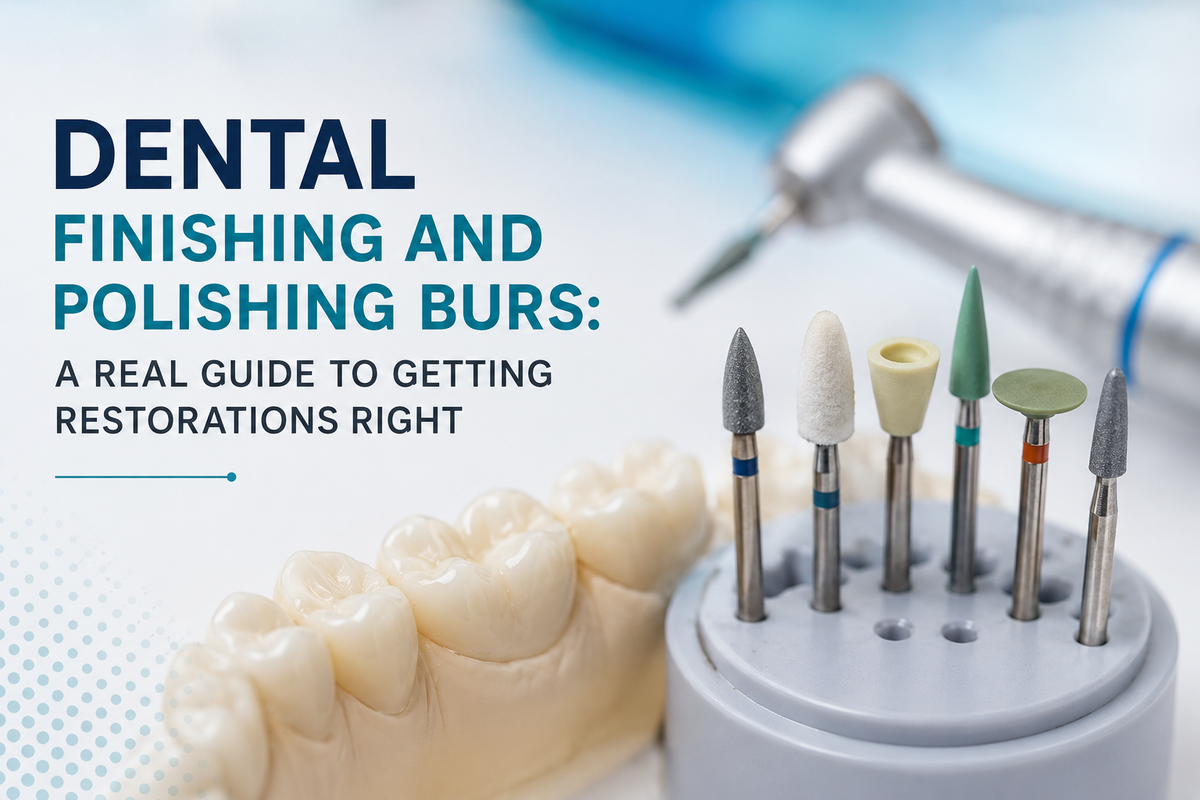
A restoration isn't really finished the moment the material's placed and shaped. That last stretch, the finishing and polishing stage, is honestly where a lot of the long-term success actually gets decided. Whether it's a composite filling, a ceramic crown, or a temporary restoration, the burs used in that final step affect how smooth the surface feels, how well it holds up, and how happy the patient ends up being with the result.
Picking the right dental finishing polishing burs matters more than people realize going in. A properly finished restoration resists plaque buildup and staining better, feels comfortable to the patient's tongue and cheek, and just holds up longer overall. At Sky Dental Supply, we build our finishing and polishing bur lineup around exactly that, precision, durability, and results that stay consistent procedure after procedure.
What Are Dental Finishing and Polishing Burs, Exactly?
They're specialized rotary instruments used to refine, smooth, contour, and polish a restoration once the main shaping's already done. Cutting burs remove larger amounts of tooth structure, finishing burs work with a lot more precision, cleaning up minor imperfections, adjusting anatomy, and getting the surface ready for that final polish. They show up constantly across composite work, ceramic and zirconia restorations, acrylic appliances, temporary crowns, metal restorations, and pretty much any cosmetic procedure worth doing carefully.
Why Does the Finishing Stage Actually Matter This Much?
A lot of clinicians pour attention into prep and placement but treat finishing almost like an afterthought, which is honestly a mistake. Proper finishing creates a smoother surface, improves comfort for the patient, cuts down plaque retention, reduces staining over time, extends how long a restoration actually lasts, produces a more natural look, protects gum tissue nearby, and improves how well the bite adjusts. A well-finished restoration reflects light the way a real tooth does, and blends in with the teeth next to it instead of standing out.
What Are the Main Types of Finishing and Polishing Burs?
Fine diamond finishing burs work well for refining ceramic restorations and enamel surfaces, giving controlled cutting, solid surface refinement, minimal material removal, and real accuracy right before the final polish.
Carbide finishing burs, with their multiple cutting blades, produce smooth results on composite materials specifically. Good control, less chatter during use, consistent finishing, and durability that holds up across a lot of procedures.
Flame-shaped burs handle marginal refinement, interproximal finishing, gingival contouring, and veneer adjustments well, thanks to a narrow design that reaches tight spots other shapes can't.
Football-shaped burs get chosen a lot for occlusal anatomy, posterior composite finishing, cuspal adjustments, and general functional contouring. The rounded shape helps preserve natural tooth anatomy while still shaping effectively.
Needle burs handle detailed finishing in tight, confined spaces well, fissure refinement, cosmetic contouring, margin adjustment, and fine detail work generally.
Where Do These Burs Actually Get Used?
Composite restorations benefit a lot here, smooth surfaces cut down plaque retention while improving how glossy and natural the finish looks. Ceramic crowns need careful margin refinement without damaging the material, which is exactly what the right finishing bur handles. Veneers depend on precise finishing to keep contours natural and margins seamless. Bridge adjustments get easier and more controlled with the right instrument, keeping the restoration's integrity intact. And cosmetic dentistry, smile makeovers especially, relies heavily on a polished finish that actually mimics natural enamel convincingly.
How Do You Actually Choose the Right Bur?
Start with the restoration material itself, composite, zirconia, ceramic, metal, and acrylic all respond differently to finishing instruments, so the material genuinely dictates the bur choice. Grit matters too, coarse removes more material, fine and extra-fine handle the final polish, and most procedures wrap up using one of those finer grits. Shape matters depending on the clinical situation, flame, football, round, tapered, needle, or pear, each one reaches a different anatomical area more effectively. And handpiece compatibility's non-negotiable, always confirm the bur actually matches your high-speed or low-speed handpiece before using it.
What Are the Best Practices for Finishing and Polishing?
Use light pressure, heavy pressure generates heat and risks damaging the restorative material. Keep the bur moving rather than holding it in one spot, which prevents uneven surfaces and overheating. Maintain proper water cooling throughout to protect the tooth and surrounding tissue. Work in sequence, finishing burs first, then move to polishing systems. And replace worn burs promptly, since an old bur reduces efficiency and can actually leave a rougher surface than intended.
What Mistakes Should You Actually Avoid Here?
Pressing too hard during the procedure. Picking the wrong grit for the material being worked. Skipping the polishing step entirely after finishing. Letting a restoration overheat mid-procedure. Continuing to use a bur that's clearly worn. Removing more restorative material than actually necessary. Paying attention to these small details tends to make a real difference in the final outcome.
Does Buying Quality Finishing Burs Actually Pay Off?
Yes, and it shows up in more than just smoother restorations. Better precision, faster procedures, longer instrument life, happier patients, restorations that last longer, consistent clinical results, less chair time, and a noticeably better final look. Quality instruments really do feed directly into treatment success, not just convenience.
Why Buy Dental Finishing Polishing Burs From Sky Dental Supply?
Our finishing and polishing burs are built using premium materials and held to strict quality standards throughout manufacturing. That means high-quality construction, precision engineering, strong cutting performance, fair pricing, stock you can actually count on, fast order processing, and support that knows the products. Whether it's a private practice, a multi-chair clinic, a dental lab, or a teaching institution, the range is built to help you handle every procedure with confidence.
How Do You Take Care of These Burs Properly?
Clean them right after use, don't let debris sit. Sterilize following manufacturer guidelines closely. Check for wear before every single procedure. Store them in organized bur blocks instead of loose in a drawer. And replace damaged instruments right away instead of pushing them further than they should go. Routine care like this keeps performance consistent and supports proper infection control at the same time.
Final Thoughts
Great restorations come down to attention at every single stage, and finishing is genuinely one of the most important, even though it's often the most overlooked. Choosing the right dental finishing polishing burs lets a clinician create restorations that are smooth, functional, and genuinely pleasing to look at, which patients notice even if they can't articulate exactly why.
At Sky Dental Supply, the goal's helping dental professionals get instruments they can actually depend on, built to support predictable results and a smoother workflow. Whether it's a single restoration or a full smile makeover, investing in premium finishing burs is really a decision that pays off in better outcomes, appointment after appointment.
Frequently Asked Questions
What are dental finishing and polishing burs used for?
Refining, contouring, smoothing, and polishing restorations after the main shaping's done, improving both function and appearance.
Can finishing burs actually be used on composite restorations?
Yes, they're commonly used to contour and smooth composite restorations before that final polish.
How often should these burs be replaced?
Depends on usage, sterilization cycles, and visible wear. A dull bur should be swapped out to keep cutting efficiency and patient safety intact.
What's the actual difference between finishing burs and polishing burs?
Finishing burs shape and smooth the restoration, polishing instruments create the final glossy surface on top of that.
Which bur shape works best for posterior restorations?
Football-shaped burs are usually preferred, since they contour occlusal anatomy effectively while preserving natural tooth structure.
Why does polishing actually matter after finishing?
It cuts down plaque buildup, improves overall appearance, reduces staining, adds to patient comfort, and helps a restoration last longer.
Are carbide finishing burs better than diamond ones?
Both have their place. Carbide works especially well on composite materials, diamond's generally preferred for ceramics and enamel refinement.
Why buy finishing and polishing burs from Sky Dental Supply?
High-quality instruments built for precision and durability, consistent performance, fair pricing, and support that's genuinely reliable for dental professionals.